How to Season Cast Iron: 6 Simple Steps to a Slick, Rust-Free Skillet

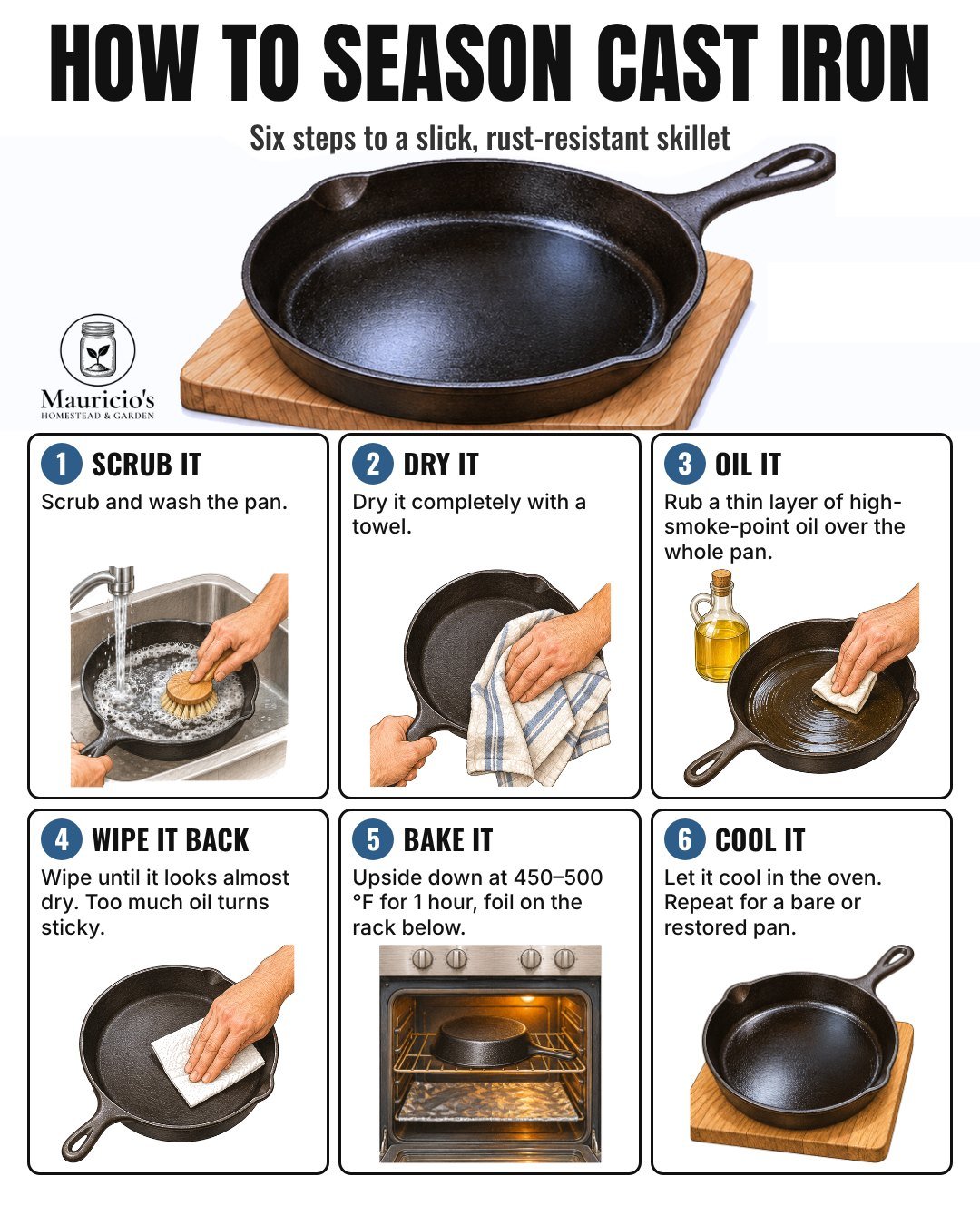
Quick answer: To season cast iron, wash and dry the pan completely, rub a very thin layer of high-smoke-point oil over the whole thing (inside, outside, and handle), then wipe it back until it looks almost dry. Bake it upside down at 450–500°F for one hour with foil on the rack below, and let it cool in the oven. Repeat 3 to 5 times for a new or stripped pan. Too much oil is the number one reason seasoning turns sticky.
I’ve cooked in cast iron my whole life. I use it for practically everything: pies and tarts in a wood-fired oven, stews for dinner, and as a griddle for searing meat. Most of my cast iron was handed down to me, and I’m pretty sure whoever gave it to me got it from someone else. Those old pans have never once let me down.
So I never really thought about seasoning until not long ago, when I bought a brand-new skillet just because I liked it. It looked like a piece of art. I started cooking in it, and everything stuck. That’s when I went looking for answers and learned what generations of cooks had built into my old pans without me ever noticing: seasoning. Here’s what I learned, and exactly how to do it.
What is cast iron seasoning?
Seasoning isn’t salt and pepper. It’s a thin, hard layer of oil that has been baked onto the iron at high heat. When oil gets hot enough, it goes through a process called polymerization: the oil molecules link together and harden into a slick, almost plastic-like coating that bonds to the metal. That coating does two jobs. It keeps food from sticking, and it keeps water away from the bare iron so it doesn’t rust.
Every time you cook with fat, you add a little more. That’s why decades-old pans like mine are so black and so slick. A new pan only has a thin factory layer, and a pan that’s been scrubbed down to bare metal has none at all.
How to season a cast iron skillet in the oven
Step 1: Scrub it
Wash the pan in warm, soapy water and scrub off any stuck-on food or rough spots. Since you’re about to season it, soap is perfectly fine here.
Step 2: Dry it completely
Towel it dry, then set it on a burner over low heat or in a warm oven for a few minutes to drive off every last bit of moisture. Bare iron can start to rust in minutes.
Step 3: Oil it
Rub a small amount of oil over the entire pan: the cooking surface, the outside, the bottom, and the handle. A paper towel or lint-free cloth works well.
Step 4: Wipe it back
This is the step most people skip, and it’s the most important one. With a clean towel, wipe the oil off again until the pan looks almost dry. There’s only a microscopic film left, and that’s exactly what you want. Thick oil doesn’t harden properly. It turns gummy and sticky.
Step 5: Bake it upside down
Put a sheet of aluminum foil or a baking sheet on the bottom rack to catch drips. Place the pan upside down on the middle rack so any extra oil runs off instead of pooling. Lodge, the U.S. cast iron maker, recommends baking at 450–500°F for one hour. University of Maine Cooperative Extension gives the same method at about 450°F.
Step 6: Let it cool in the oven, then repeat
Turn the oven off and let the pan cool inside it. For a new pan, a rusty pan you’ve restored, or one that’s been stripped to bare metal, repeat the whole oil-wipe-bake cycle. UMaine Extension suggests 3 to 5 rounds to build a solid base. After that, regular cooking does the rest.
I season my pans in a regular electric oven, and it works just fine. You don’t need anything special.
What’s the best oil for seasoning cast iron?
I’ll be honest: I seasoned my new skillet with what I had on hand, which was sunflower oil, and it worked well. Later I learned that some oils are considered better, but the truth is that most neutral cooking oils with a high smoke point will do the job. Lodge recommends vegetable oil, canola oil, or melted shortening. Other popular choices include grapeseed oil and refined avocado oil.
- Good choices: vegetable oil, canola oil, sunflower oil, grapeseed oil, shortening.
- Skip for seasoning: butter and extra-virgin olive oil. They have lower smoke points and tend to leave a soft or sticky layer.
- Flaxseed oil: popular online because it makes a very hard finish, but many cooks find that it can flake off. It’s not necessary.
The oil matters much less than the technique. A thin coat of cheap vegetable oil, baked properly, beats a thick coat of expensive oil every time.
Can you use soap on cast iron?
Yes. I wash all of my cast iron with regular dish soap, and nothing bad happens. Lodge says warm, soapy water is fine, as long as you dry the pan completely afterward. University of Maine Extension is a little more cautious: it notes there’s no clear consensus, and recommends using only a small amount of soap and rinsing and drying fully.
The old “never use soap” rule goes back to the days of harsh homemade lye soaps, which really could strip seasoning. Modern dish soap is much gentler. What actually damages cast iron is soaking it in water, putting it in the dishwasher, and leaving it wet.
How to keep your seasoning in good shape
- Cook with it often. Cooking with fat is the best seasoning there is. The more you use it, the better it gets.
- Clean it soon after cooking. Wipe it out while it’s still warm, rinse, and scrub with a brush or a chainmail scrubber.
- Dry it right away, then warm it on the stove for a minute.
- Rub in a drop of oil after each wash.
- Don’t shock a hot pan with cold water. It can warp or crack.
- Go easy on long-simmered acidic foods like tomato sauce in a new pan. They can wear down thin seasoning. A well-seasoned old pan handles them better.
Troubleshooting: sticky, flaky, or blotchy seasoning
- Sticky or tacky surface: too much oil, or the oven wasn’t hot enough. Put the pan back in a 450°F oven for another hour, or scrub it down and start over with a much thinner coat.
- Flaking black bits: a layer didn’t bond well. Scrub the loose seasoning off and re-season with thin coats.
- Food still sticks: the seasoning is still thin. Keep cooking with fat (bacon, cornbread, fried potatoes) and do a few more oven rounds.
- Rust spots: scrub the rust off, dry the pan, and re-season. A badly rusted pan needs a full restoration first: remove the rust, wash, dry, then season.
My biggest cast iron mistake
Honestly? Not knowing about seasoning sooner. Because my pans were inherited and already perfectly seasoned by years of family cooking, I never had a problem, so I never learned why they worked so well. If you’ve got an old family skillet, take care of it. That black finish took generations to build.
Cast iron seasoning FAQ
Do I need to season a new “pre-seasoned” pan?
Pre-seasoned pans are ready to use, but the factory layer is thin. That’s exactly what happened with my new skillet: food stuck at first. A few rounds of oven seasoning, plus regular cooking, makes a big difference.
How often should I season cast iron in the oven?
Only when it needs it: when it’s new, after you remove rust, or when food starts sticking or the surface looks dull and gray. If you cook in it regularly and oil it after washing, you may go years without another oven session.
Can I season cast iron on the stove?
Yes, for quick touch-ups. Heat the clean pan on the burner, wipe on a thin film of oil, and let it smoke for a few minutes until it darkens. The oven method gives a more even coat on the whole pan.
Does cooking in cast iron add iron to food?
A little. The amount depends on the food, the cooking time, and the pan, but UMaine Extension notes it’s small compared with the iron you need from your diet.
