How to Season Firewood: 6 Mistakes That Keep Your Wood Wet

Most firewood problems don’t start in the stove. They start in the woodpile. Over the years I’ve seen a lot of good wood go to waste: stacks rotting from the bottom up, piles that started to heat up like compost under a tarp, and “seasoned” wood that hissed and smoked the moment it hit the fire.
The good news is that drying firewood isn’t complicated. Avoid a handful of common mistakes and almost any wood will be ready to burn. Here are the six I see most often, what happens when you make them, and what I do instead.
Quick answer: To season firewood properly, split it, stack it off the ground in loose rows, cover only the top, and give it time: roughly 6 months for softwoods and 12 months for hardwoods in climates with real seasons. Firewood is ready when it reads about 15 to 20 percent moisture on a freshly split face.
Why seasoning firewood matters
Freshly cut wood is full of water. When you burn it, a big part of the fire’s energy goes into boiling that water off instead of heating your home. According to the US Environmental Protection Agency, wet wood produces less heat and more smoke and creosote, while dry wood is easier to light, burns hotter, and means less wood to split and stack. Wood is generally considered seasoned when it drops below about 20 percent moisture.
Mistake 1: Stacking firewood on bare ground
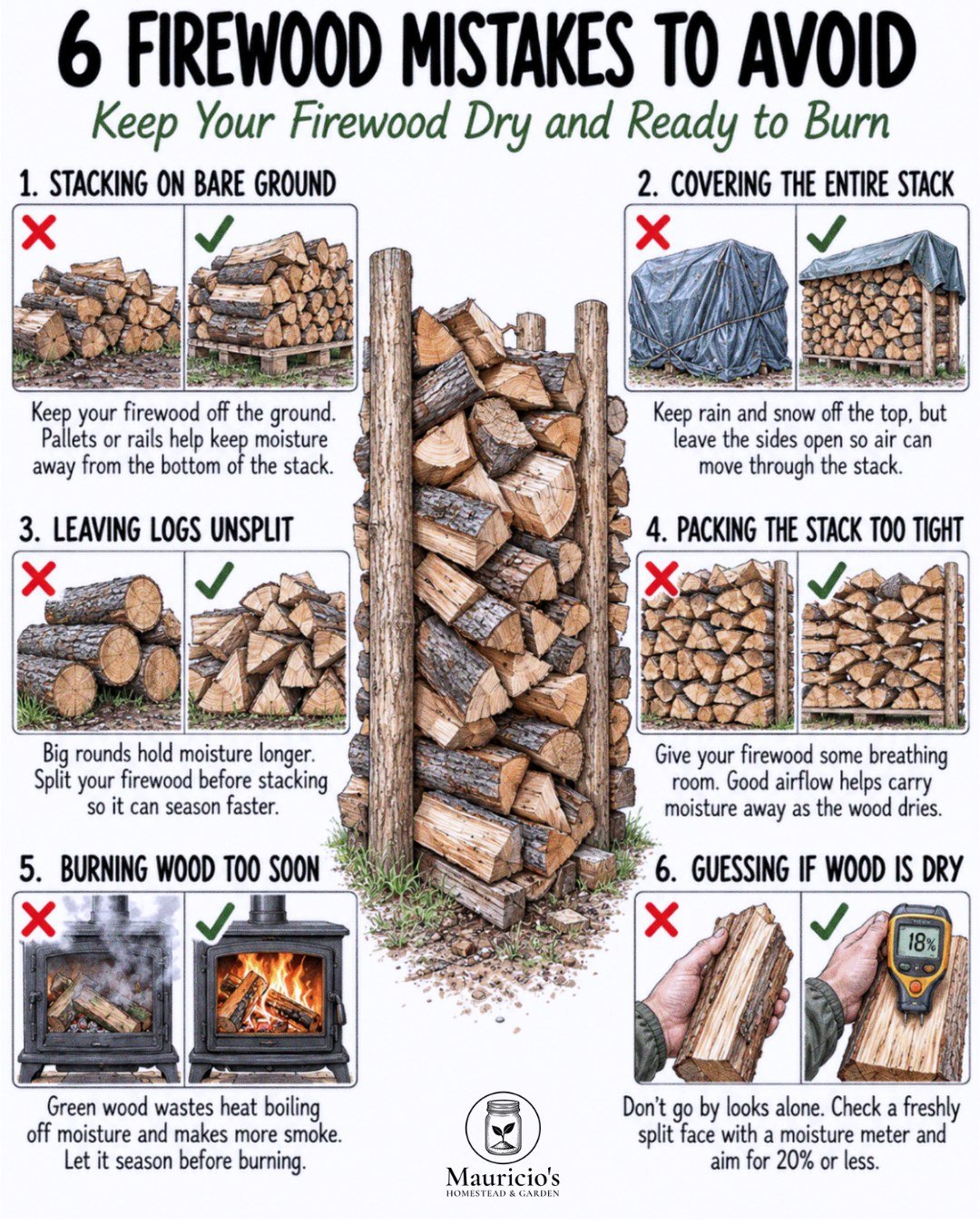
This is the mistake I’ve seen ruin the most wood. When firewood sits directly on the soil, the bottom rows pull moisture up from the ground and start to rot. In my experience it happens much faster on damp ground or on soil with a thick, living layer of organic matter, full of fungi and insects, than on dry, bare dirt.
What I do instead: I raise every stack. My favorite base is a couple of concrete blocks with horizontal wooden rails across them, which keeps the wood well above the ground and lets air pass underneath. Pallets work great too. I often take them apart and use the boards to build a simple rack. The EPA gives the same advice: keep wood off the ground by stacking it on rails.
Mistake 2: Covering the entire stack
It seems logical to wrap your woodpile in a tarp to keep it dry, but it does the opposite. A tarp that goes down the sides traps moisture inside the stack. And it’s not just full covers: even when a tarp hangs halfway down, water vapor collects under the top of the pile. I’ve seen wood in those conditions start to decompose and even warm up like a compost pile.
What I do instead: cover only the top. A roof, a sheet of metal, or a tarp tied over the top layer keeps rain and snow off, while the open sides let wind carry the moisture away.
Mistake 3: Leaving logs unsplit
Whole rounds have bark all the way around them, which acts like a raincoat and holds moisture in. Splitting exposes more wood to the air, so it dries much faster.
What I do: the wood I’ll need soon gets split right away. The rest I sometimes leave in rounds and split as I need it, depending on how much space I have. Rounds take up more room, they’re harder to stack, and they tend to roll. Keep in mind that rounds dry more slowly, so give them extra time or split them early if you need them this season.
For size, I aim for pieces about 4 to 6 inches across. That’s just an average. Some will end up thinner and some thicker, and that’s fine. A mix of sizes is actually handy when you’re building and feeding a fire.
Mistake 4: Packing the stack too tight
Air is what dries firewood. If you jam rows of wood tightly against each other or against a wall, the middle of the pile stays damp.
What I do instead: I leave space between rows so air can move through the whole stack, and I keep stacks away from walls. That way, when I go to use the wood, it’s dry all the way through, not just on the outside.
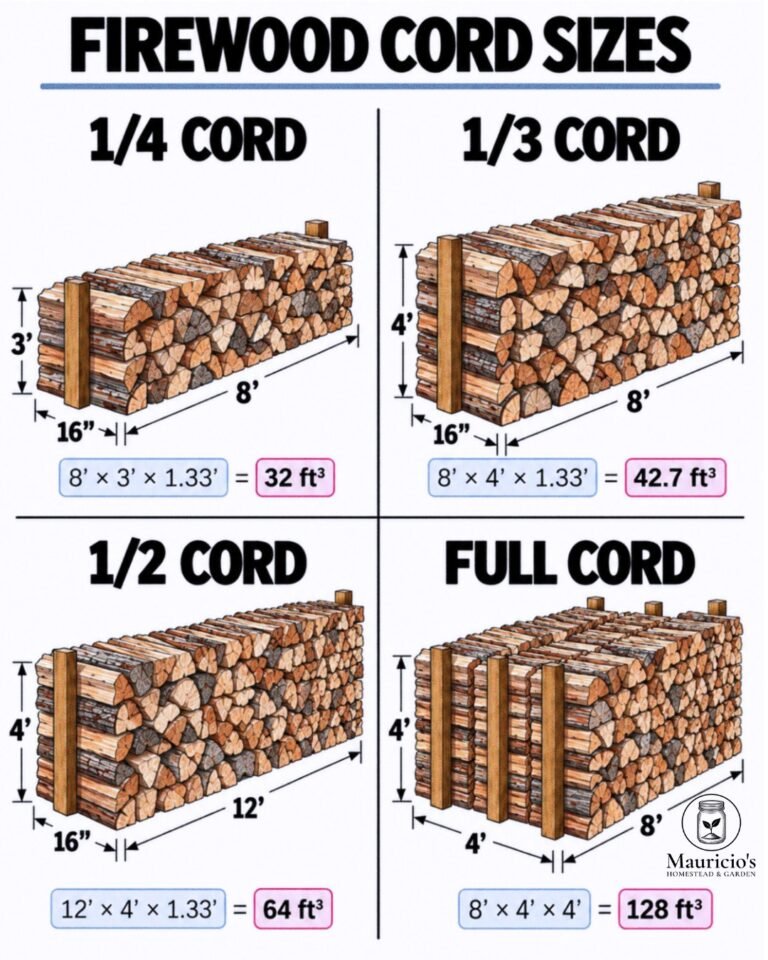
A quick note: if you’re measuring a delivery to see how much wood you bought, you do stack it tightly for the measurement (see my guide on how much is a cord of wood). For drying, keep pieces snug within a row but leave breathing room between rows.
Mistake 5: Burning wood too soon
I once burned green wood on purpose while camping, just to see the difference. It took forever to light, it kept going out, it made a lot of smoke, and it barely produced any coals. In a stove or fireplace, that same wood also leads to creosote buildup in the chimney.
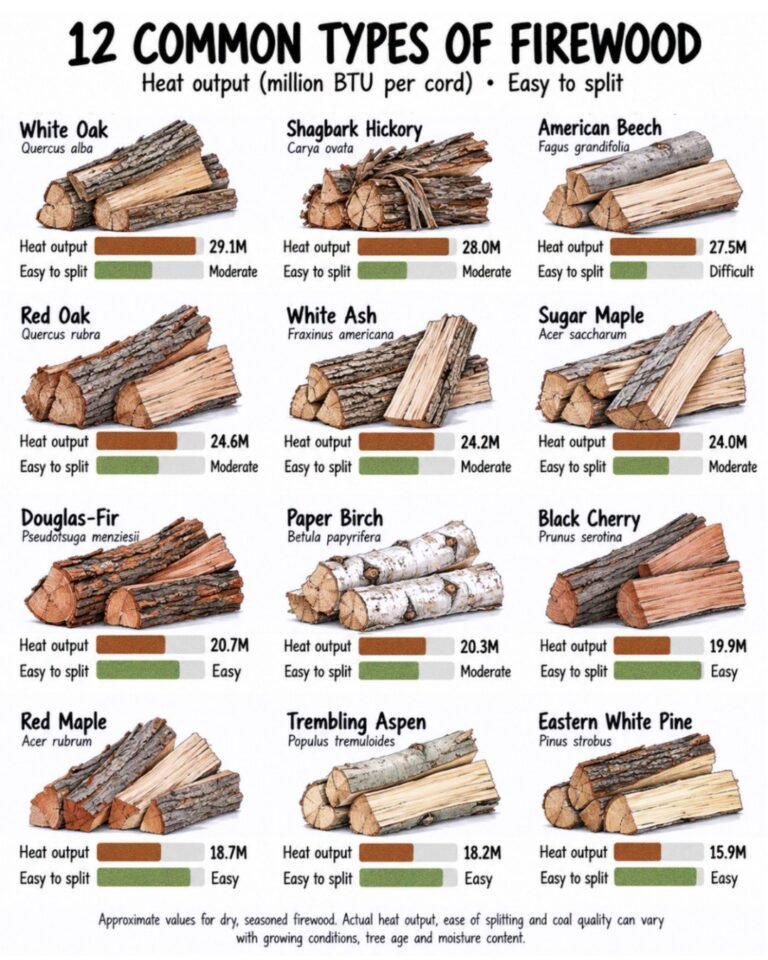
How long firewood needs depends on the species, the climate, and how you stack it. The EPA recommends drying softwood for at least 6 months and hardwood for at least 12 months. In climates with real seasons, that matches my experience: about a year for most hardwoods. In warm, tropical climates I’ve had many species dry in three to four months. For more on which woods dry and burn best, see my firewood BTU chart.
| Wood type | Typical seasoning time* |
|---|---|
| Softwoods (pine, fir, spruce) | 6 months or more |
| Most hardwoods (maple, ash, cherry) | About 12 months |
| Dense hardwoods (oak, hickory) | 12 months or more |
*In climates with seasons, for split wood stacked off the ground with the top covered. Warm, dry, windy conditions speed things up; cool, humid, shady conditions slow them down. Always check before you burn.
Mistake 6: Guessing if the wood is dry
Looks can fool you. Wood that’s gray and cracked on the outside can still be wet inside.
How I check without a meter
With time and practice you almost don’t need a meter, especially if you know the species you’re working with. Here are the signs I look at:
- Weight. Dry wood feels noticeably lighter than fresh wood of the same species and size.
- Color. Seasoned wood loses the fresh, bright color of newly cut wood.
- My machete test. I shave a thin slice off a piece with a machete or an axe. If the color inside isn’t uniform, with a darker or wetter-looking core, the wood isn’t dry yet.
- Cracks and sound. According to the EPA, dry wood is lighter, has cracks on the ends, and sounds hollow when you knock two pieces together.
When I use a moisture meter
Whenever I buy firewood, I bring a moisture meter. It saves time and settles the question on the spot. I look for a reading between 15 and 20 percent. Basic meters are inexpensive; the EPA notes you can find one for about $15 to $40.
The trick is where you measure. Split a piece and push the pins into the freshly split face, along the grain, not into the outside or the end, which dry first and can give you a falsely low reading.
Does it matter which way the bark faces?
You’ll hear people argue about stacking bark up or bark down. Honestly, in my experience it doesn’t make much difference. Airflow, getting the wood off the ground, and covering the top matter far more. For what it’s worth, the EPA suggests stacking in a single row with the split side down.
When should you cut firewood?
For me there’s no fixed season. I cut when I need wood or when it becomes available, like when a tree comes down. The key is to plan ahead: whenever you cut, give it enough drying time before the cold months when you’ll need it.
Firewood seasoning checklist
- Split the wood, roughly 4 to 6 inches across.
- Raise the stack on blocks, rails, or pallets.
- Stack in rows with space between them, away from walls.
- Cover the top only; leave the sides open.
- Give it time: about 6 months for softwoods, 12 months for hardwoods.
- Check a freshly split face. Aim for 15 to 20 percent moisture.
Frequently asked questions
Can firewood be too dry?
Wood seasoned outdoors rarely gets too dry, because it stays in balance with the moisture in the air. Very dry, kiln-dried wood burns fast and hot, so you may need to adjust your stove’s air control and load size.
Should I keep firewood in a shed?
A woodshed with a solid roof and open or slatted sides is ideal, because it keeps rain off while letting air through. A fully closed shed or garage, on the other hand, can trap moisture and slow drying, so season wood outside first and move it in once it’s dry.
Will wet firewood dry out if I bring it inside?
Bringing in a day or two of wood ahead of time can help the surface dry, but it won’t properly season green wood. Wood that’s still wet inside needs months, not days.
The bottom line
Seasoning firewood comes down to four things: get it off the ground, split it, let air move through it, and keep rain off the top. Do that, give it time, and check it before you burn, and your fires will light easier, burn hotter, and keep your chimney cleaner.
Have a firewood question? Send me a message through the Contact page, and find more guides in the Firewood section.
Sources
- US EPA: Burn Dry Firewood (Wet Wood Is a Waste brochure)
- US EPA: Test Your Wood with a Moisture Meter
- University of Tennessee Extension: Moisture Content of Seasoned Firewood
- University of Illinois Extension: How to Measure and Handle Firewood
This article is for general education. Always follow your stove or fireplace manufacturer’s instructions and local burning rules. See our Disclaimer.